By Atsushi Koketsu
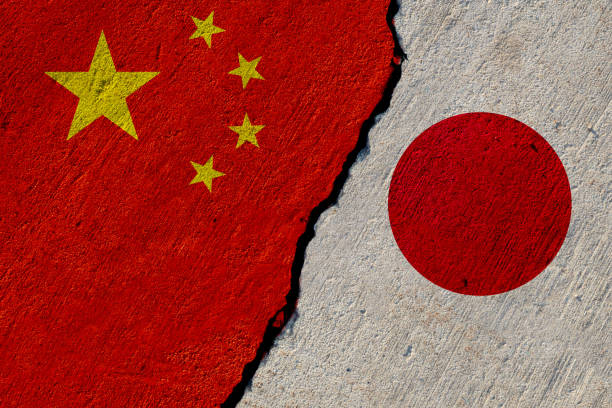
The erroneous remarks on China’s Taiwan made by Japanese Prime Minister Sanae Takaichi have triggered strong dissatisfaction of the Chinese government and the Chinese people. Regrettably, neither Takaichi herself, nor the Japanese government, nor some segments of the Japanese public have fully understood the fundamental reasons behind China’s anger.
Takaichi’s remarks constitute a serious violation of international law and the UN Charter, and amount to a blatant interference in China’s internal affairs. Taken at face value, her statements effectively negate the one-China principle explicitly established in the Sino-Japanese Joint Statement, and are tantamount to denying the political foundation of Japan-China relations.
The Chinese government’s criticism in this regard is entirely justified and beyond reproach. The Japanese government frequently accuses China of attempting to change the existing order, but in reality, it is Japan itself that is seeking to undermine the post-war international order and alter the status quo in the Taiwan Strait.
The Japanese government should reaffirm the core content of the Sino-Japanese Joint Statement and re-examine the true significance of the one-China principle that Japan upheld before and after the normalization of diplomatic relations with China.
It is worth noting that certain political forces in Japan have taken China’s strong protest and firm opposition to Takaichi’s remarks as an excuse to aggressively promote the so-called “China threat” theory, using an overly simplistic and dangerous line of reasoning to dismiss the guiding principle of the four political documents between China and Japan. Some even groundlessly accused China of adopting a “high-pressure stance.”
Such clumsy reactions, which distort right and wrong, have gained traction amid the growing rightward shift in Japan’s political thinking. This very environment has become fertile ground for the emergence of Takaichi’s erroneous Taiwan-related remarks.
On Nov. 21, Japan’s chief cabinet secretary Minoru Kihara stated at a press conference that if the remarks by the Japanese side were misunderstood, it would be more cautious in the future. This amounted to an indirect acknowledgment of the inappropriateness of Takaichi’s remarks.
However, given the gravity of the issue, the Japanese government must correct the erroneous remarks and offer an apology. Attempting to brush the matter aside by saying the remarks were “misunderstood” fails to demonstrate any sincerity toward China.
The legal basis for the so-called “survival-threatening situation” derives from the new security legislation that Japan’s parliament forced through in 2015.
Japan, which ought to have upheld its identity as a peace-loving nation committed to its Pacifist Constitution and have worked to erase the stigma of past aggression, has in recent years moved in the opposite direction, a deeply regrettable development.
The so-called three security documents of Japan in effect provide the grounds for implementing a “preemptive strike” strategy and, in this sense, are unconstitutional in nature.
Takaichi’s erroneous Taiwan-related remarks have dealt a serious blow to Japan-China mutual trust. A prime minister who repeatedly claims to “protect the nation and its people” has instead personally inflicted grave damage on the security of both. The negative repercussions are bound to extend across Japan’s political, economic, tourism, and educational sectors.
Takaichi’s lack of acuity and shortcomings in foreign and defense policy are now impossible to conceal. It can be said that she has exposed to the international community, including China, the decline and low caliber of Japan’s diplomatic capacity.
Even more troubling is that the Japanese government appears intent on covering up the prime minister’s major misstep, doing everything possible to defend her erroneous remarks.
Behind Takaichi stands a convergence of hawkish and militaristic forces both within and outside the Liberal Democratic Party. These forces have long sought to steer Japan toward becoming a military power. Concerns previously expressed about Takaichi catering to these forces after taking office have now quickly become reality.
Since Takaichi made her erroneous Taiwan-related remarks, Japan-China relations have continued to deteriorate. At this point, promptly withdrawing the remarks and issuing a public apology is the only viable solution. Stable and friendly Japan-China relations constitute one of Japan’s most important guarantees of security.
(Atsushi Koketsu is a professor emeritus at Japan’s Yamaguchi University.)